Quick Answer
There is no automatic winner between a scissor-led haircut and a fade. I look at your hair structure, head shape, current length, preferences, maintenance expectations, and the result you want. Sometimes the right answer is primarily scissor work, sometimes a fade, and sometimes a combination of both — agreed with you before I start cutting.
Many clients ask whether they should choose a scissor-led haircut or a fade. It is a fair question — but the answer is not the same for everyone. At FERAT BARBER, I work with both scissor cuts and fades, and I do not begin with a fixed rule. The goal is to understand your hair, your preference, and what will suit you before we agree on the direction.
What Is the Difference Between a Fade and a Scissor-Led Cut?
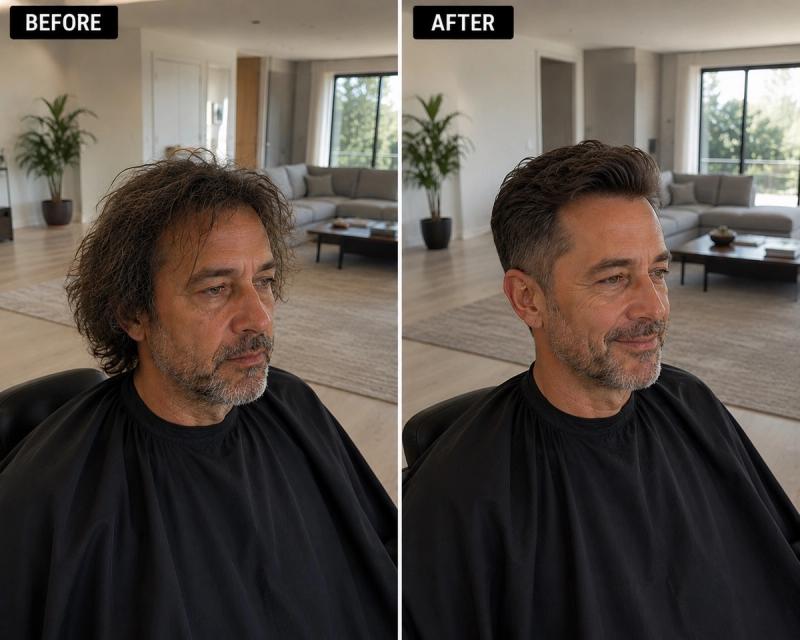
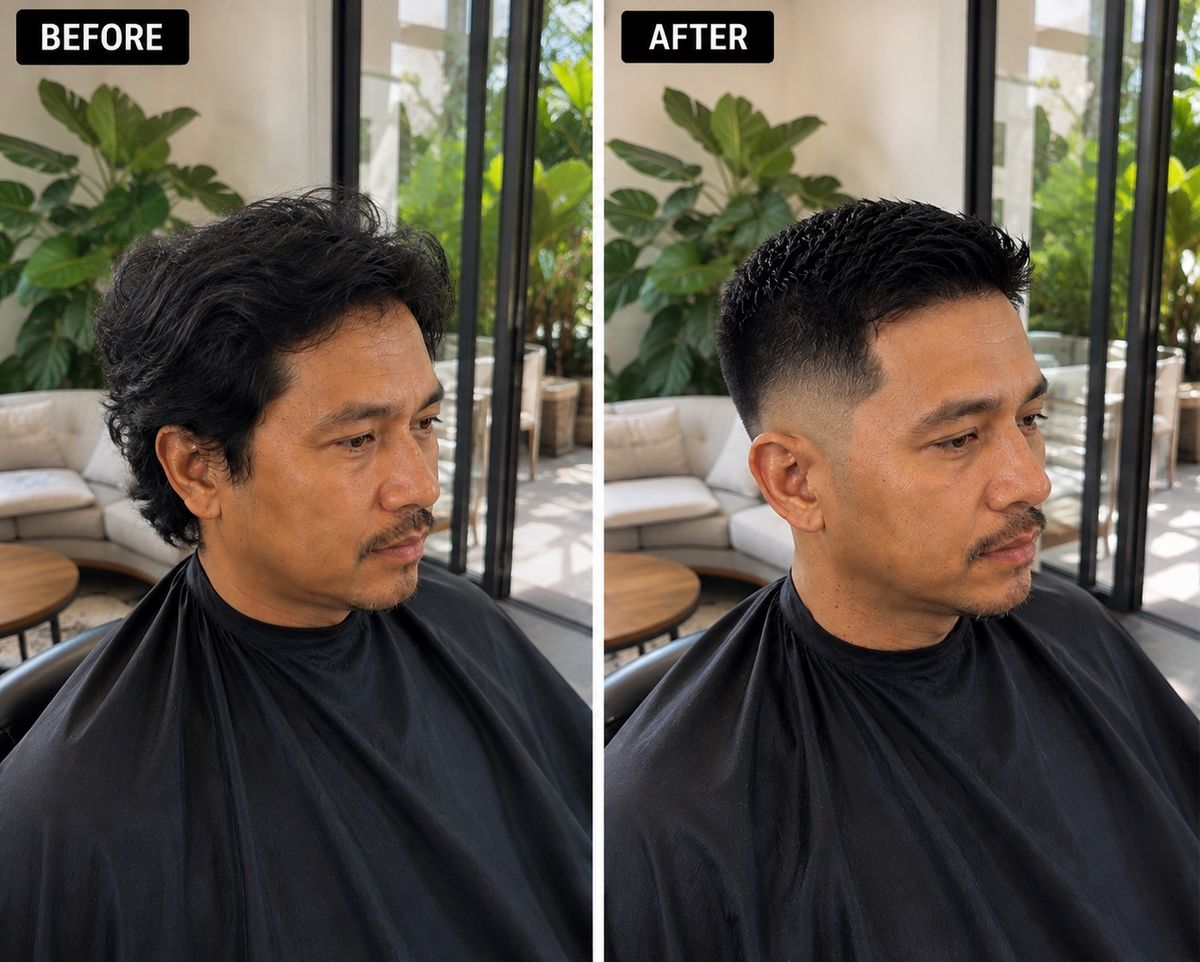
In simple terms, a fade is a haircut where the sides are blended shorter as part of the overall structure — the length changes gradually rather than staying one length all the way down. A scissor-led cut puts more of the shape, length, and movement into the work done with scissors — especially on top and through the sides when you want more length or a softer transition. These two approaches are not always separate choices. Many haircuts use both. The useful starting point is understanding what each approach does, not assuming one label fits every style.
I Do Not Choose from a Formula
When I assess a client, I may consider head shape, hair structure, current length, age as part of the overall picture, what the client wants, how much maintenance they prefer, and the overall result I believe will suit that person. I may consider age as part of the style and what the client wants — but I do not decide a haircut from age alone, and I do not use rigid face-shape or head-shape formulas. Two clients with similar features can still need different approaches because hair growth, preference, and lifestyle matter just as much. Assessment comes before the cut — not a template I apply to everyone.
When Scissor Work May Make More Sense
There is no single reason I may lean toward more scissor-led work rather than a fade. It depends on the person. A client may want to preserve more length, prefer a more natural result, or need the haircut shaped around their existing hair structure rather than a strong contrast on the sides. Fine, straight, longer hair and wavy, longer hair both require careful consideration when I plan how the cut should be structured — I take that seriously rather than forcing a one-size approach. What matters is what will suit you, not a trend label.
When a Fade May Make More Sense
A fade may make more sense when head shape, hair structure, the client's specific request, and the overall result I believe will suit them point in that direction. Age can be part of that conversation — as context, not as a rule that someone must have a fade. I do not repeat low, mid, or high fade education here; if you want to understand how I think about fade height, head shape, and balance in detail, read my guide on how I choose the right fade for your head shape.
Sometimes the Best Answer Is Both
Many modern haircuts combine scissor work on top with faded or tapered, shorter sides. I perform these combinations frequently. That means "scissor or fade?" is sometimes the wrong question entirely. The better question may be how the two should work together for your hair and the result you want. This is a common approach in my work — not because everyone is doing it, but because it can create a balanced result when it suits the client.
Your Hair Today Affects What I Can Do Today
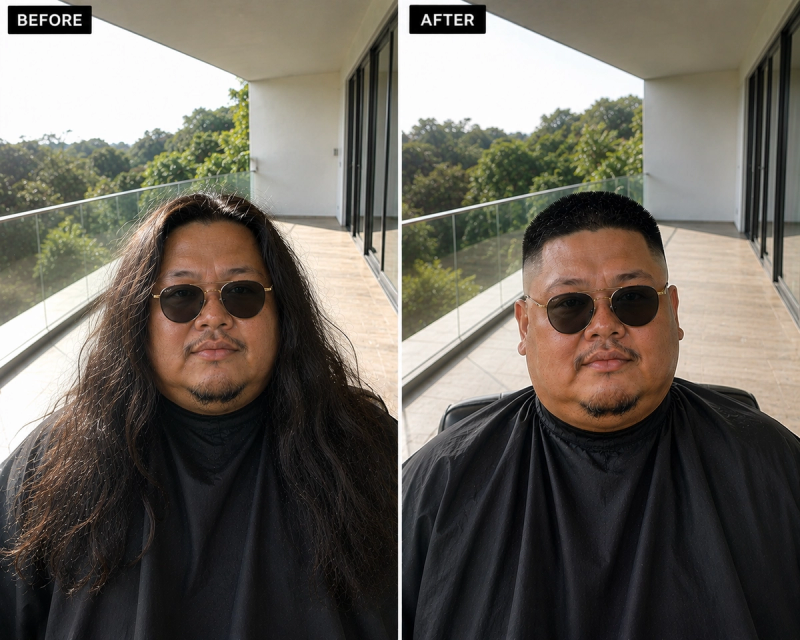
I often see clients whose previous barber gave them essentially the same haircut every visit. When someone shows me a new reference photo, I look at whether that result is realistic with their current hair length, hair structure, and head shape. If the result can be achieved in one appointment, I can work toward it. If the hair needs time to grow, or the desired look requires a transition, I explain that clearly rather than forcing an impossible result in a single visit. Sometimes the right haircut is possible today. Sometimes the right result needs a little time. I would rather be honest about that than promise an exact copy of a photo that your hair cannot support yet.
Maintenance Is Part of the Decision
Some clients are happy to maintain a very sharp look and visit more often. Others prefer longer gaps between appointments. I take that preference into account when we plan the haircut. For clients who want to visit less frequently, I know approaches that can be planned around longer intervals between appointments — but I do not treat one style as universally low-maintenance for everyone. Maintenance is part of the consultation, not something I decide after the fact.
Scissor Cutting Is Not One Single Technique
There is misinformation around scissor work. Clients sometimes think "scissor cut" means one simple method applied the same way every time. In reality, how scissors should be used depends on the person's hair structure and on understanding where and how to use them for the result being created. Scissor work is not simply cutting everything with scissors — the approach changes according to the hair and the shape we are building. I consider that when I plan the cut, rather than treating scissors as a generic label.
What If You Are Not Sure Which One You Want?
You do not need to arrive knowing barber terminology or whether you want a scissor-led cut, a fade, or a combination. That is normal. I assess your hair, explain what I see, and we discuss the options before I start cutting. If you want to understand how a FERAT BARBER appointment works — including consultation before the cut — you may also find my guide on what to expect from a VIP barber appointment useful reading.
Frequently asked questions
What is the difference between a fade and a scissor-led haircut?
A fade blends the sides shorter as part of the haircut structure. A scissor-led cut puts more of the shape, length, and movement into scissor work. Many haircuts combine both — they are not always separate choices.
How does Ferat decide which one suits me?
I assess your hair structure, head shape, current length, preferences, maintenance expectations, and the result you want when you are in front of me. There is no universal rule — the decision is made through individual assessment, not a fixed formula.
Can I combine a fade with scissor work on top?
Yes. I frequently perform combinations with scissor work on top and faded or tapered sides. For many clients, that combined approach is the most balanced result.
Can I show Ferat a reference photo?
Yes. Reference photos help show direction, but I evaluate whether the result is achievable with your current hair structure, head shape, and length. If a transition is needed, I explain the process rather than forcing an unrealistic result in one visit.
What if I want a haircut that needs less frequent maintenance?
Tell me your preference. I take maintenance expectations into account when we plan the haircut and can adapt the approach for clients who prefer longer gaps between appointments — without treating one style as universally low-maintenance for everyone.