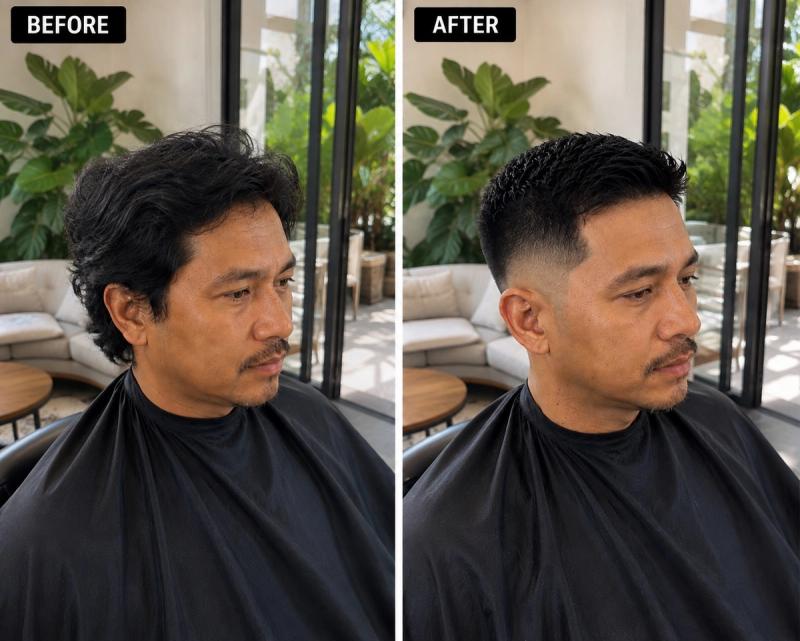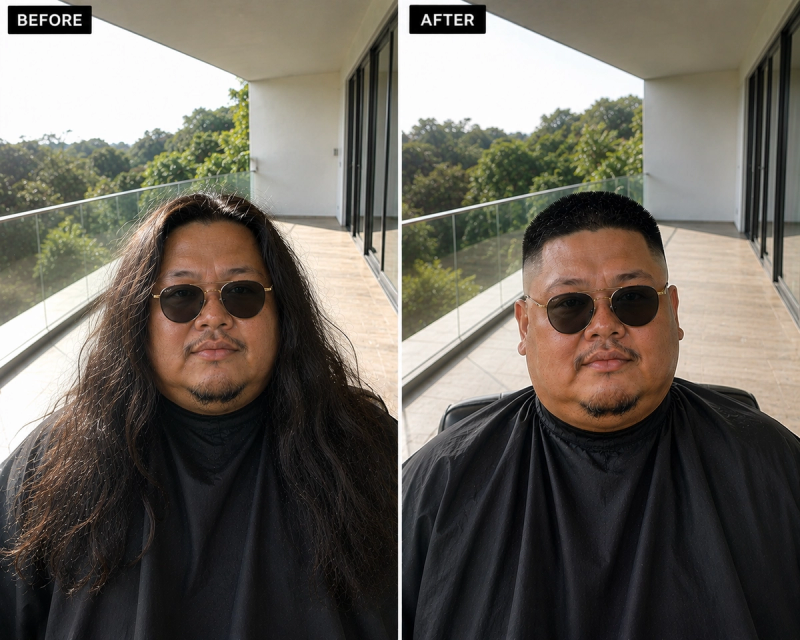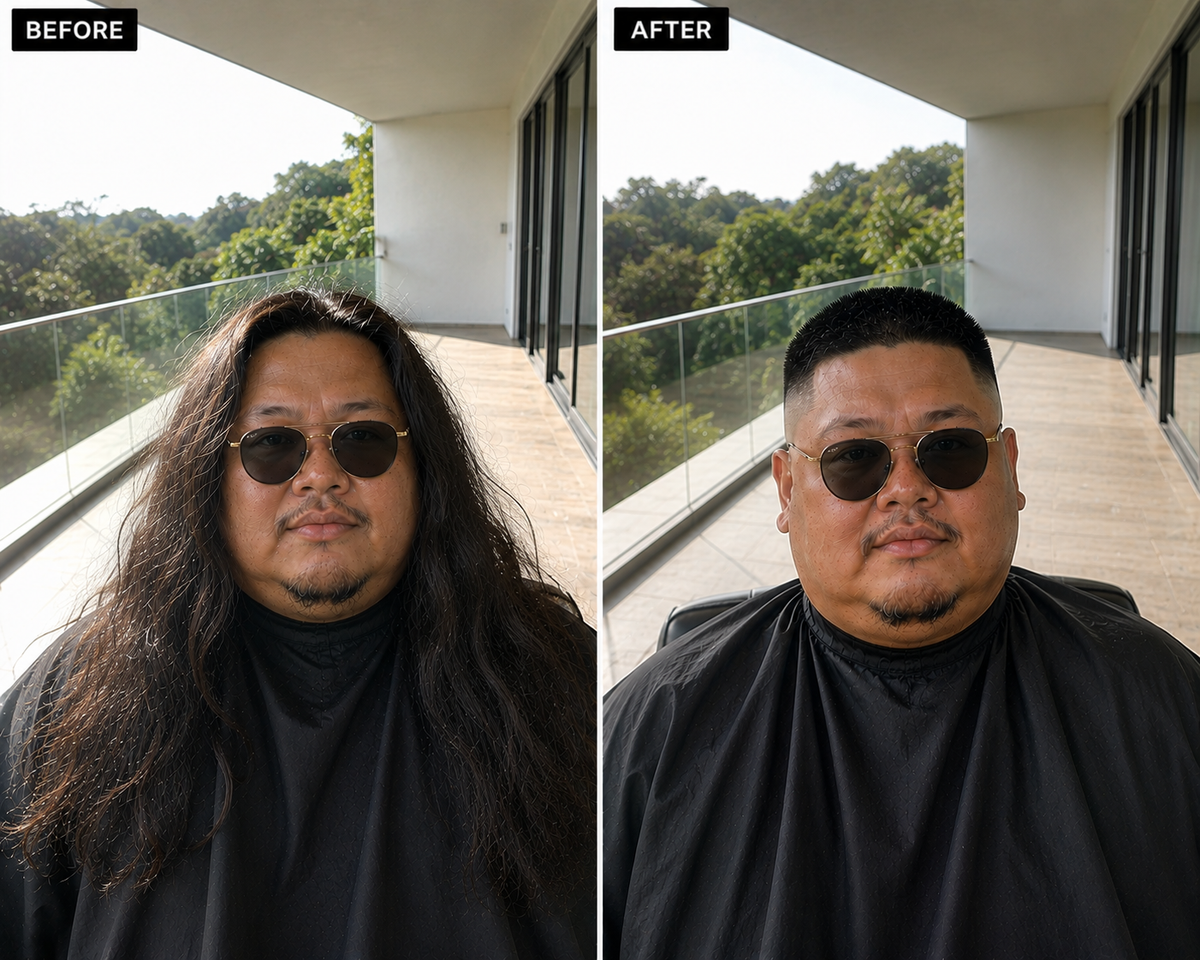
Quick Answer
The right fade depends on your head shape, hair density, growth pattern, and how much styling time you want each day. I assess these in person before recommending a low, mid, or high fade, and adjust the blend to keep the result clean and natural for your face.
When I arrive at a client's home, hotel, or office, the first thing I look at is not a trend photo — it is how your hair sits on your head today. A fade can look sharp on one person and unbalanced on another if the head shape and hair growth pattern are ignored. I choose fades based on proportion, hair structure, and how you actually live — not because a style is popular online.
I Start with Your Head Shape
Before I talk about low, mid, or high, I look at overall balance — how the top sits against the sides, where the crown rises, and how the fade will frame the face. A fade changes the silhouette around your head, so I want the sides to support the top rather than fight it. I may recommend a softer transition if the crown is flat or the sides need more weight. If the top has strong length and density, I may suggest more contrast — but only when the hair can carry it. I do not use rigid face-shape formulas. Two clients with similar features can still need different fades because hair growth and preference matter just as much.
Hair Structure Changes the Decision
Density, growth direction, and texture tell me how clean a fade can look and how long it will stay sharp. Coarse or strong growth often holds a crisp line well. Finer or uneven growth may need a slightly higher blend so the transition looks natural as it grows out. I also watch cowlicks and the direction hair pushes at the temples — those details affect where the fade should start and how the blend should be shaped. If the hair on top is thin, I may keep more weight on the sides instead of pushing a very high contrast fade that the hair cannot balance. These are practical assessments I make in person, not rules that apply to everyone the same way.
Low, Mid, or High Fade?
These labels describe where the fade begins and how much contrast you see between the sides and the top. None of them is automatically right or wrong — the choice depends on the head shape, hair structure, and how much maintenance you want.
Low fade
A low fade starts close to the natural hairline and keeps more weight on the sides. I often suggest this when a client wants a cleaner shape without a dramatic change, or when their work setting calls for a neat, understated look. It can be easier to grow out smoothly because the transition sits lower on the head.
Mid fade
A mid fade sits between the low and high options — enough contrast to look sharp, but usually still balanced for everyday wear. I may recommend this when the top has enough length and density to match the sides, and when the client wants a defined shape without going to the strongest contrast.
High fade
A high fade starts higher on the head and creates stronger contrast between the sides and the top. I consider this when the hair on top can support the look and when the client wants a bolder, sharper result. If the top is too short or too thin, I will say so — a high fade in that situation can look unbalanced rather than clean.
Your Lifestyle and Maintenance Matter
I also ask about your routine — how often you cut your hair, how much time you spend styling each morning, and whether you prefer a soft grow-out or a sharp line every week. A fade that suits your office, travel schedule, or gym routine is more useful than one that looks good in a photo but needs more upkeep than you want. Some clients like a crisp finish every ten days. Others prefer a shape that still looks acceptable after two or three weeks. I factor that in before I recommend the height of the fade and how tight the blend should be.
What Happens If You Are Not Sure What You Want?
If you already know what you want, I listen first and advise honestly — I do not push a different style for the sake of it. If you are unsure, I walk you through what I see: head shape, hair behaviour, and what I think will suit you. I visualize the result before I start cutting and explain my recommendation in plain language. We agree on the direction before the cut begins. I do not rush appointments — that assessment is part of the service, especially during appointments at your location where I can take the time you need.
Reference photos can help. They show direction — length, texture, general shape — but I treat them as a starting point, not something to copy exactly. What works in a photo may not suit your head shape or hair growth. I would rather adjust the idea honestly than deliver a fade that looks like the picture but wrong on you.
Frequently asked questions
What if I do not know which fade suits me?
That is common. I assess your head shape, hair structure, and lifestyle in person, explain what I recommend, and we agree before the cut begins. You do not need to arrive with the perfect style already chosen.
Can I show a reference photo?
Yes. Reference photos are useful for direction, but I may suggest adjustments based on your head shape, hair growth, and maintenance preference. The goal is a result that suits you — not an exact copy of a photo.
How often does a fade need maintenance?
It depends on how sharp you like the lines and how quickly your hair grows. Many clients return every one to three weeks to keep a fade crisp. A softer low fade may look acceptable for longer between visits.
Do you provide VIP barber service at homes, hotels, and offices?
Yes. FERAT BARBER travels to your home, hotel, office, or other agreed location across Kuala Lumpur and Selangor. I bring professional tools to your location.
Do you cut hair inside a vehicle?
No. VIP barber service means I travel to your location — it does not mean a haircut inside a car or barber van. I set up professional tools at your home, hotel, or office.